Wearable Cyborg® HAL®
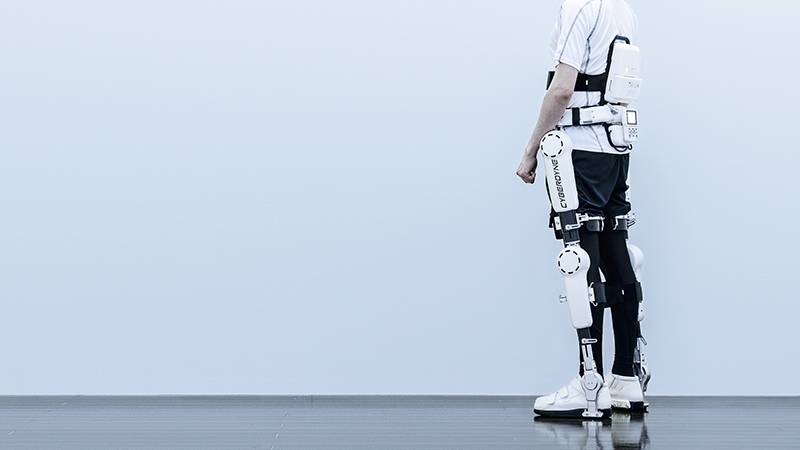
Hybrid Assistive Limb® (HAL®) is the world‘s first* technology that improves, supports, enhances and regenerates the wearer’s physical functions according to the wearer’s intentions. Because of this feature, it is also called “Wearable Cyborg”.
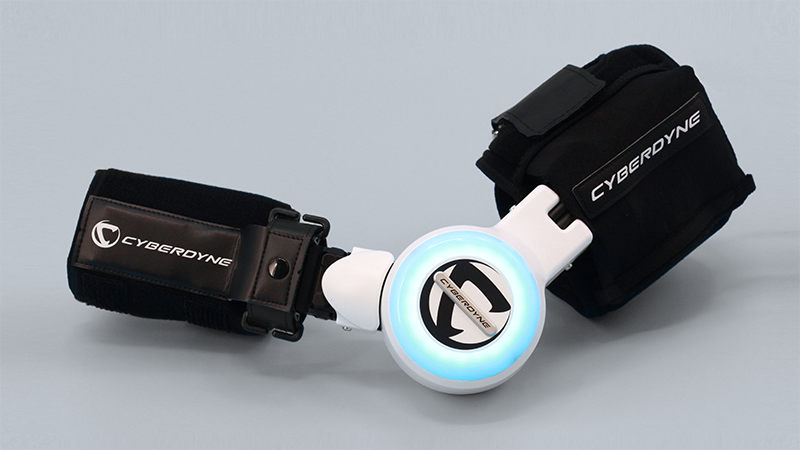
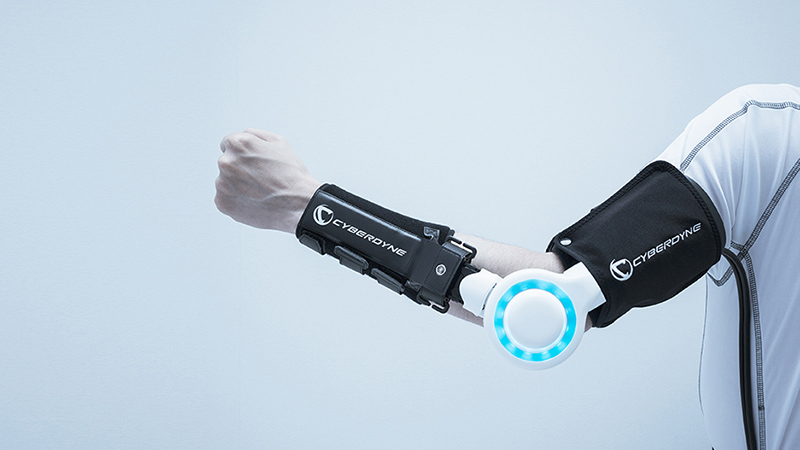
When a person tries to move, the brain sends a signal to the muscle to command the movement. At that time, a very faint signal that reflects the wearer’s intention to move appears on the skin’s surface. Using its sensors attached to the skin’s surface, HAL detects these so-called “bio-electrical signals” to perform the desired movements with the wearer’s voluntary commands.
*The invention of Cyborg-type Robot (Japanese Patent no.4178186) was awarded the Invention of 21st Century Award by the Japan Institute of Invention and Innovation in 2009.
How HAL Works
Our intention to move our legs triggers bio-electric signals (BES) from the brain that communicate with the muscles that make locomotion possible.
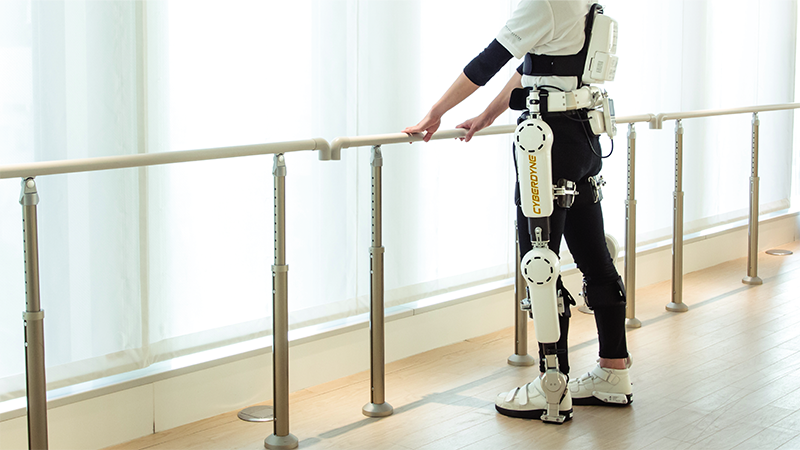
Such signals from paralyzed patients may be too weak to trigger proper movement. However, HAL can sensor faint BES that trickle onto the skin, process it, and simultaneously assist one’s desired movement with motors located on each hip and knee joint.
More importantly, the brain receives feedback from the target muscle through the sensory system and learns how to move legs correctly after repetition of dedicated HAL gait training. HAL research shows significant improvement in walking speed for patients with spinal cord injuries after therapy with the device.
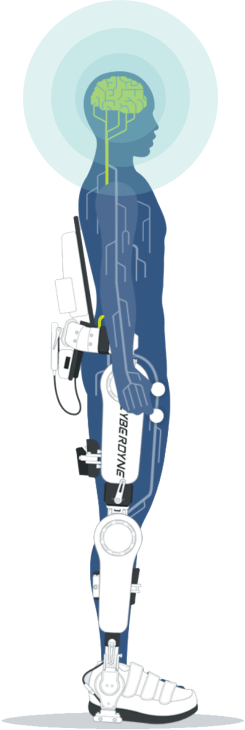
Step 01 Send
The brain sends command signals. When a person tries to move their body, the brain transmits necessary signals through the nerves to the muscles.
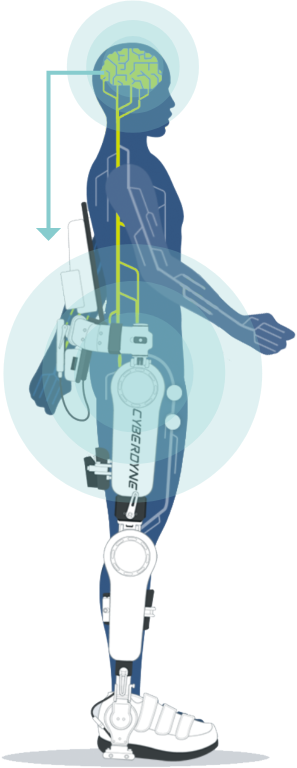
Step 02 Receive
The muscles receive the command signals. Each muscle contracts to move its corresponding joint when it receives the appropriate command signal sent from the brain through the nerves. With a spinal cord injury, this pathway is disrupted and the signal is too weak to generate sufficient force.
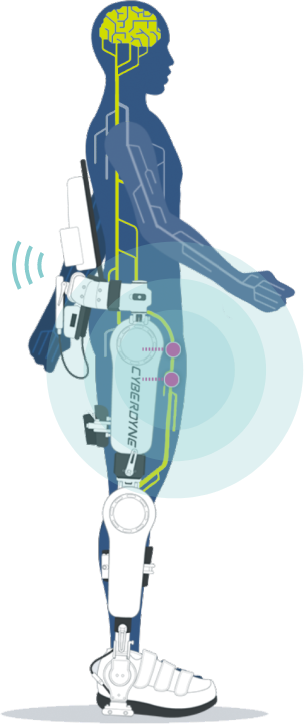
Step 03 Read
HAL reads the signals. Signals sent to the muscles by the brain trickle onto the skin surface as very faint bio-electrical signals (BES). HAL uses sensors placed on the surface of the skin to detect these BES and recognizes the kind of joint movement the wearer intended.
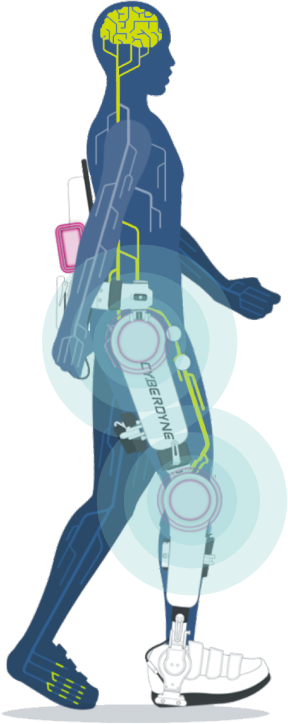
Step 04 Move
HAL moves as the wearer intends. HAL controls the power units at each joint based on these BES and allows the wearer to perform the desired movements with their voluntary commands.
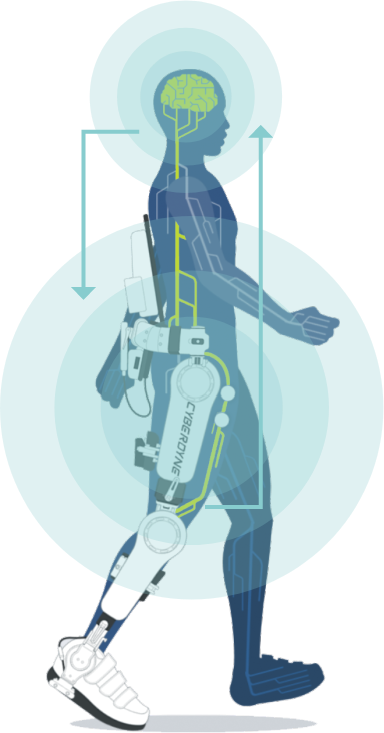
Step 05 Feedback
Information of movement is sent back to the brain. When HAL has appropriately assisted the intended movement, the feeling is fed back to the brain. Active use of these neural pathways for voluntary movement with physical feedback to the brain leads to an improved ability for the wearer to walk on their own.
Application of HAL
HAL has a wide range of applications, such as improving physical function in medical and healthcare fields, heavy work support in other workplaces, and supporting recovery activities at disaster sites.